EN
EN
J774A.1 Mouse Monocyte Macrophage Cell Line
Introduction
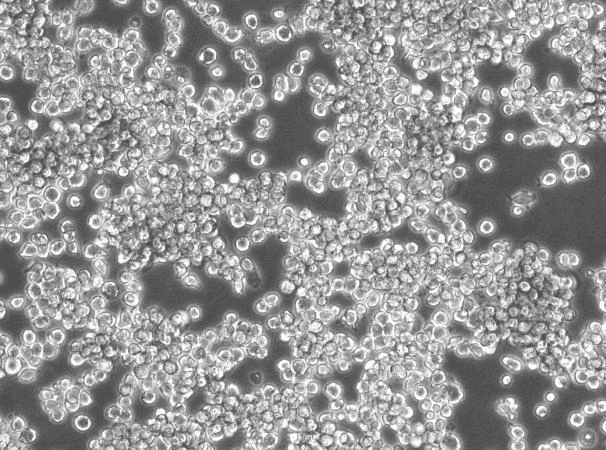
The J774A.1 mouse monocyte-macrophage cell line was originally isolated in 1968 from the ascites of an adult female BALB/cN mouse with reticulum cell sarcoma. These cells exhibit antibody-dependent phagocytosis. Their growth is inhibited by dextran sulfate, purified protein derivative (PPD), and lipopolysaccharide (LPS). The cells are capable of producing interleukin-1β (IL-1β) and large amounts of lysozyme.
OriCell™ J774A.1 Mouse Monocyte-Macrophage Cell Line is primarily used in immunological research, particularly for studying macrophage immune responses and antigen presentation mechanisms. It is also employed to investigate macrophage-mediated anti-infection processes and to screen anti-infective agents, including studies on the inhibitory effects of Boschniakia rossica polysaccharides on inflammasome activation and pyroptosis in macrophages.
When citing our products in academic publications, please use the following format: “OriCell™ [Product Name] + [Catalog Number], from Cyagen Biosciences.”
Product Information
| Product Name | OriCell™ J774A.1 Mouse Monocyte-Macrophage Cell Line |
| Alternative Name | J774A.1 |
| Catalog Number | M3-1201 |
| Amount of Cells | 1×10⁶ cells/vial |
| Tissue Origin | Mouse Ascites |
| Cell Characteristics | Adherent Growth; Monocyte/Macrophage-like |
| Culture Conditions | 95% air; 5% CO2; 37 ℃ |
| Culture Medium | DMEM + 10% FBS |
| Doubling Time | 24 ~ 48 h |
| Biosafety Level | 1 |
| Storage at | Liquid Nitrogen (-196 ℃) |
| Precautions | Avoid using trypsin. It is recommended to use culture dishes and high-quality serum. |
QC
- Pass the detection of bacteria, fungi, mycoplasma, and endotoxins.
- Verified by cell recovery viability testing.
- Verified by STR analysis.
Please refer to "COA" for details.
General Handling Principles
- Maintain strict aseptic technique. Ensure complete sterility throughout all procedures, particularly within the laminar flow hood and incubator.
- Follow standardized protocols. Adhere strictly to the product manual. Implement rigorous control over experimental variables and include appropriate parallel controls.
- Use high-quality consumables and reagents. This product requires culture vessels suitable for adherent growth, and the reuse of these vessels is not recommended. The reagents used must be validated for reliability, cell compatibility, and batch-to-batch consistency.
Note: The cryopreservation medium of this product contains DMSO, which may pose potential risks. Please handle it with care.
| Abbreviation | Name | Cat. No. |
| FBS | Fetal Bovine Serum | See official website |
| BCS | Bovine Calf Serum | SBCST-01001 |
| Glu | Glutamine | SGLU-10201 |
| SP | Sodium Pyruvate | SCSP-10301 |
| Dex | Dexamethasone | SDEX-10401 |
| NBCS | Newborn Calf Serum | NCSST-01001 |
| HS | Horse Serum | SCHST-01001 |
| NEAA | Non Essential Amino Acid | NEAA-10201 |
| β-mer | β-mercaptoethanol | BMER-10301 |
| P/S | Penicillin- Streptomycin | ATPS-10001 |
| ITS | Insulin / Transferrin / Selenite | ITSS-10201 |
Thawing and Culturing of Cells
Materials Required
- OriCell™ J774A.1 Mouse Monocyte-Macrophage Cell Line (Cat. No.: M3-1201)
- OriCell™ Complete Medium For J774A.1 Cell Line (Cat. No.: CMM3-1201)
Steps
Note: If thawing is planned within 24 hours of receipt, store the cells in an ultra-low temperature freezer at -80 °C. For long-term storage (>24 hours) , keep them in liquid nitrogen. Before thawing, transfer the cells from liquid nitrogen to -80 °C and hold them there for 10 minutes. This will allow any residual liquid nitrogen to evaporate and prevent vial explosion.
- Pre-warm the water bath to 37 °C.
- Warm the complete medium to 37 °C.
- Add at least 5 mL of pre-warmed complete medium to a 15 mL centrifuge tube for subsequent use.
- Remove the cryovial containing cells from the −80 °C freezer, immerse it in the 37 °C water bath, and gently and quickly swirl to thaw the cryopreservation medium.
Note:
- Gently swirl the cryovial during thawing to ensure rapid and uniform thawing.
(2) Avoid submerging the cap in water to prevent contamination.
(3) Stop thawing in the water bath when only a single ice crystal (approximately 2 mm in diameter) remains, then continue gently swirling the vial until it is completely thawed.
- Wipe the outer surface of the cryovial with 75% ethanol.
- In a biosafety cabinet, open the cryovial and transfer the cell suspension to the prepared centrifuge tube using a Pasteur pipette.
- Rinse the cryovial once with 1 mL of complete medium to collect residual cells and minimize loss.
- Centrifuge the cell suspension at 250 × g for 4 minutes.
Note: Please calculate the corresponding rotational speed using the formula: RCF = 1.118 × 10⁻⁵ × r × RPM2 (where RCF is the relative centrifugal force, r is the rotor radius in cm, and RPM is the rotational speed).
- Carefully remove the supernatant after centrifugation. Add 2 mL of pre-warmed complete medium, gently resuspend the cell pellet by pipetting up and down to mix thoroughly.
- Seed the cells into a 6 cm culture dish or culture vessel with an equivalent growth surface area. Add sufficient complete medium so that the total volume in a 6 cm culture dish is no less than 4 mL.
Note: It is recommended to use culture dishes for recovery, passaging, and routine culture. The cells exhibit limited differentiation and are easy to passage.
- Gently swirl the flask to evenly distribute the cells, then incubate in a CO₂ incubator at 37 °C with 5% CO₂ and saturated humidity.
Note: Do not move or observe the cells within the first 2 hours after seeding, as this may impair cell adhesion, causing poor morphology, clumping, and uneven attachment.
- On the day after recovery, observe cell status and either replace the medium with fresh complete medium or passage the cells as needed.
Note: If an excessive number of floating cells or any abnormal conditions are observed, investigate promptly and contact us for assistance.
- Replace the complete medium every 3 days until the cells reach approximately 85% confluence, at which point they are ready for passage.
Passaging of Cells
Materials Required
- OriCell™ Phosphate-Buffered Saline Solution (1X) (Cat. No.: PBS-10001)
- OriCell™ Complete Medium For J774A.1 Cell Line (Cat. No.: CMM3-1201)
Steps
- Aspirate and discard part of the supernatant using a pipette, leaving a small amount (e.g., 2–3 mL for a 6 cm dish) in the culture dish to facilitate gentle pipetting.
Note: If a large number of suspended cells are observed under the microscope, collect the entire supernatant and centrifuge it together with the detached cells to avoid cell loss.
- Using a 1 mL disposable pipette tip or a serological pipette, aspirate and dispense the remaining supernatant repeatedly against the bottom surface of the culture dish to detach the cells. Note: Avoid vigorous pipetting to prevent excessive bubble formation, which may damage the cells. Differentiated cells that remain firmly attached after gentle pipetting should be discarded.
- Transfer the cell suspension to a 15 mL centrifuge tube.
- Rinse the culture dish with PBS (approximately 3 mL for a 6 cm dish or 6 mL for a 10 cm dish) to collect any remaining cells, then add the wash to the centrifuge tube.
- Centrifuge all collected cell suspensions at 250 × g for 4 minutes.
- Carefully remove the supernatant after centrifugation. Add 2 mL of complete medium to the 15 mL centrifuge tube and gently resuspend the cell pellet by pipetting up and down to thoroughly mix.
- Seed the cells into a suitable culture vessel at a density of (4–6) × 104 viable cells/cm², or adjust the seeding density based on the actual growth conditions of the cells.
- Note: We recommend manual cell counting when conditions permit and counting efficiency is high, in order to obtain an accurate cell concentration to guide seeding. If precise counting is not feasible, subculturing at an appropriate ratio is a reliable alternative. Typically, J774A.1 cells are passaged at a ratio of 1:3 to 1:4, with cells reaching passage confluence within 72 hours. Please adjust the subculture ratio according to the actual condition of the cells.
- Gently agitate the vessel to ensure uniform cell distribution and place it in an incubator at 37 °C, 5% CO₂, and saturated humidity.
- On the day after passaging, observe the cell condition. If a significant number of floating cells are present and the cells appear to be in poor condition, replace the culture medium.
- Replace the culture medium every 3 days. When cells reach 85% confluence, passage or cryopreserve the cells.
Cryopreservation of Cells
Materials Required
- OriCell™ NCR Protein-Free Cryopreservation Medium For General Use (Cat. No.: NCPF-10001)
- OriCell™ NCR Cryopreservation Medium For General Use (Cat. No.: NCRC-10001)
Steps
- Cells should be cryopreserved once they reach an appropriate density suitable for passaging.
- For cell digestion, please refer to passaging steps 1-9 above.
- Carefully remove the supernatant after centrifugation and gently resuspend the cells in an appropriate volume of cryopreservation medium.
- Aliquot the cells into cryovials according to the desired cell number or proportion.
Note: If accurate cell counting is not feasible, we recommend aliquoting cells proportionally for freezing. Prolonged exposure to non-culture conditions will significantly compromise cell viability. Maintain the cells at 4 °C during counting to minimize metabolic activity and preserve cell integrity.
- When using any of the recommended NCR cryopreservation media above, cryovials can be directly placed individually into a -80 °C freezer.
Note: Avoid opening the freezer door during the first 4 hours of freezing, as temperature fluctuations can adversely affect cell viability.
- After approximately 8 hours, transfer the cryovials to liquid nitrogen for long-term storage.
Note: Do not store the cryovials at -80 °C for more than 48 hours.
Cyagen Biosciences (Suzhou) Inc. reserves all rights to the technical documents of OriCell™ cell culture products. Without the written permission of Cyagen Biosciences (Suzhou) Inc. any part of this document shall not be adapted or reprinted for other commercial purposes.