
 EN
EN
Mouse Embryonic Stem Cells
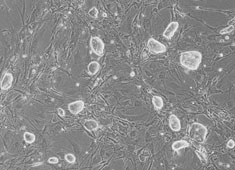
Cyagen OriCell™ Mouse Embryonic Stem Cells (ESCs) are pluripotent stem cells derived from the inner cell mass of blastocysts. These cells possess unlimited self-renewal and directed differentiation capacity, making them a critical research tool in developmental biology, regenerative medicine, tissue engineering, and drug screening.
Unlike adult stem cells, embryonic stem cells maintain long-term proliferation potential and can differentiate into derivatives of all three germ layers (ectoderm, mesoderm, and endoderm). In immunodeficient mice, they can also generate teratomas, serving as a gold standard for testing pluripotency.
| Cat. No. | Product Name | Size | Price(USD) | Price(USD) | Quantity | Order |
|---|---|---|---|---|---|---|
 |
{[ (val.price == '0.00' || !val.is_hot) ? '暂无' : (val.price * 0.8|number:0) ]} | - + |
Available Mouse Embryonic Stem Cell Lines
Cyagen OriCell™ Balb/c Mouse Embryonic Stem Cells
-
Maintain stable diploid karyotype after expansion.
-
Express key ESC markers, form embryoid bodies (EBs) in vitro, and teratomas in vivo.
-
Derived from 3.5-day Balb/c blastocysts and cultured on γ-irradiated MEFs with OriCell™ Complete Medium.
Cyagen OriCell™ 129 Mouse Embryonic Stem Cells
-
Retain diploid karyotype, ESC marker expression, and EB/teratoma formation ability.
-
Widely applied in developmental biology, regenerative medicine, and transgenics.
-
Derived from 3.5-day 129 mouse blastocysts, cultured with OriCell™ medium and γ-irradiated MEFs.
Cyagen OriCell™ C57BL/6 Mouse Embryonic Stem Cells
-
Robust ESC markers, EB formation in vitro, and teratoma formation in vivo.
-
Extensively used for generating genetically modified mouse models.
-
Derived from 3.5-day C57BL/6 blastocysts, expanded on OriCell™ feeder MEFs with optimized medium.
FAQ on Embryonic Stem Cells
Q1: What are embryonic stem cells?
Embryonic stem cells (ESCs) are pluripotent cells from the inner cell mass of blastocysts. They can differentiate into any cell type in the body.
Q2: Which statement best describes embryonic stem cells?
ESCs are pluripotent, self-renewing, and capable of generating derivatives of all three germ layers.
Q3: What are embryonic stem cells from mice?
Mouse embryonic stem cells are derived from early-stage mouse embryos and are widely used as a model for genetic research and regenerative medicine.
Q4: How big are mouse embryonic stem cells?
Typically 10–15 µm in diameter, depending on culture conditions.
Q5: Why use mouse embryonic fibroblasts (MEFs)?
MEFs serve as feeder layers to support the growth of embryonic stem cells, providing essential signals for maintaining pluripotency.
Q6: How to culture mouse embryonic stem cells?
They are typically cultured on γ-irradiated MEFs with OriCell™ Complete Medium, ensuring stable growth and differentiation potential.
Q7: What is the difference between adult stem cells and embryonic stem cells?
Adult stem cells are multipotent and limited to specific tissue types, while embryonic stem cells are pluripotent with unlimited expansion capacity.
Q8: What is the difference between pluripotent stem cells and embryonic stem cells?
All embryonic stem cells are pluripotent, but pluripotency can also be achieved artificially via induced pluripotent stem cells (iPSCs).
Q9: Embryonic stem cells vs induced pluripotent stem cells (iPSCs): what’s the difference?
ESCs are derived directly from embryos, while iPSCs are reprogrammed adult cells. ESCs are the gold standard for pluripotency, while iPSCs avoid ethical concerns.
Cyagen OriCell™ Product Advantages
-
Quality Assurance & Literature Support
-
Comprehensive quality control reports (free from bacteria, fungi, mycoplasma, and endotoxins) – directly usable for publication.
-
Widely cited in numerous peer-reviewed papers.
-
-
Complete Culture Medium
-
Serum carefully screened from nearly all commercial sources; bulk-purchased to ensure stable, optimal conditions for cell maintenance.
-
Extensively validated by literature and publications.
-
-
Protein-Free Cryopreservation Medium
-
No protein components, minimizing contamination risk and interference with cell growth.
-
High recovery rate (>90%), stable performance across batches, no need for controlled-rate freezing
-

