EN
EN
129 Mouse Embryonic Stem Cells With RFP
Introduction
Embryonic stem cells (ESCs) are pluripotent stem cells derived from the inner cell mass of a blastocyst. They have the ability to differentiate into ectoderm, endoderm, and mesoderm, giving rise to various cell types. Unlike other stem cells, embryonic stem cells can proliferate indefinitely. Their plasticity and unlimited proliferation make them a major focus in regenerative medicine and tissue engineering research.
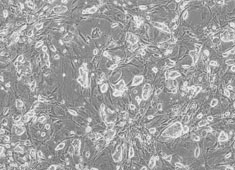
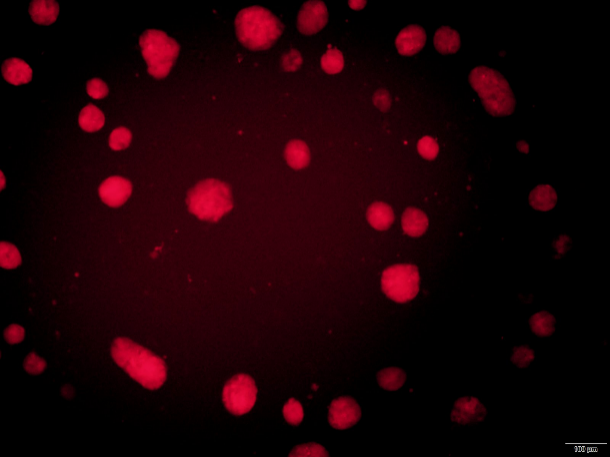
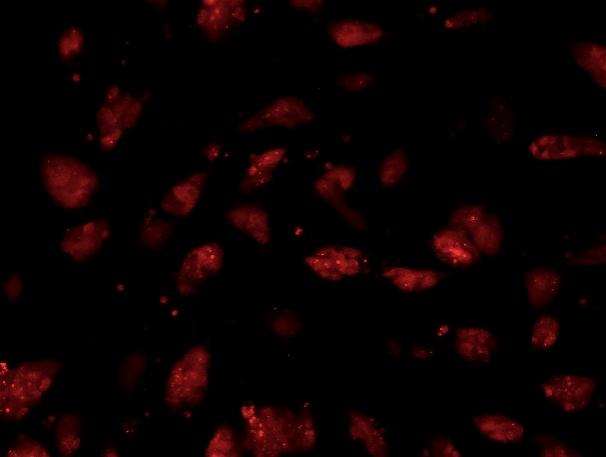
OriCell™ 129 Mouse Embryonic Stem Cells With RFP maintain a normal diploid karyotype after in vitro expansion and culture. They express specific embryonic stem cell markers, can form embryoid bodies (EB) in vitro, and are capable of generating teratomas in vivo. These cells are valuable tools for basic and applied research in fields such as developmental biology, regulatory mechanisms, regenerative medicine, and potential therapeutic applications. Furthermore, genetically modifying these embryonic stem cells and introducing them into the mouse germline is an effective approach to produce genetically modified mice.
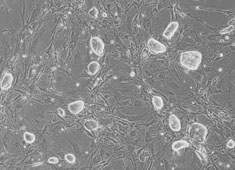
OriCell™ 129 Mouse Embryonic Stem Cells With RFP are derived from the inner cell mass of blastocysts from pregnant 129 mice at 3.5 days post-coitum. They are cultured on feeder layers of γ-irradiated mouse embryonic fibroblasts (MEFs) using OriCell™ Complete Medium for Mouse Embryonic Stem Cells (Cat. No.: MUXES-90011). Following transfection, they stably express the RFP reporter gene, undergo expansion through passaging, and are cryopreserved.
When citing our products in academic journals, please indicate "OriCell™ + Catalog Number, from Cyagen Biosciences (Guangzhou) Inc."
Product Information
| Name | OriCell™ 129 Mouse Embryonic Stem Cells With RFP |
| Catalog Number | MUAES-01201 |
| Number of Cells | 1×10⁶ cells/vial |
| Passage Number | P23 |
| Storage at | Liquid Nitrogen (-196℃) |
QC
- Pass the detection of bacteria, fungi, mycoplasma and endotoxins.
- Pass the viability examination. The viable rate is higher than 50%.
- The cell doubling time is less than 72 hours.
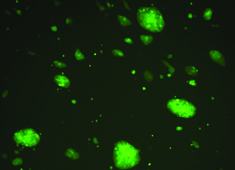
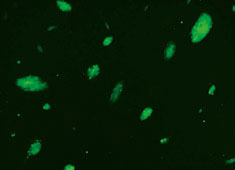
- By immunofluorescence detection, it expresses Oct4, SSEA-1 and Nanog (≥ 90%), but does not express SSEA-3 and SSEA-4 (≤ 5%).
Please refer to "COA" for details.
General Handing Principles
- Ensure that all equipment is kept clean and tidy.
- Please follow the instructions.
- Use suitable and reliable consumables and reagents.
- If using feeder cells for culture, it is recommended to use OriCell™ ICR Mouse Embryonic Fibroblasts (Inactivated) (Cat. No.: MUIEF-01002) .
- If using serum-free and feeder-free culture conditions, it is recommended to use OriCell™ Serum Free Medium For Mouse Embryonic Stem Cells (Type II, Feeder-free) (Cat. No.: MUXES-90061) .
- Usually the inoculation density of OriCell™ 129 Mouse Embryonic Stem Cells With RFP (Cat. No.: MUAES-01201) is (1~2) ×104 live cells/cm2.
Warm Notice: The cryopreservation solution of this product contains DMSO, which has potential risks. Please handle it carefully.