EN
EN
F344 Rat Bone Marrow Mesenchymal Stem Cells
Introduction
Bone marrow mesenchymal stem cells (BMSCs) are a type of multipotent stem cell residing in the bone marrow stroma. Due to their strong proliferative capacity and immunomodulatory properties, BMSCs are widely applied in tissue engineering, cell therapy, and gene therapy.
As a research hotspot, F344 rat bone marrow mesenchymal stem cells are commonly used in regenerative medicine and tissue engineering, particularly in studies involving bone, cardiovascular, and nervous system disorders.
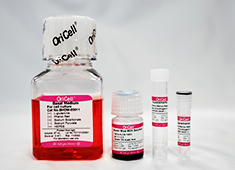
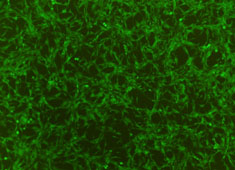
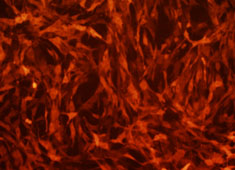
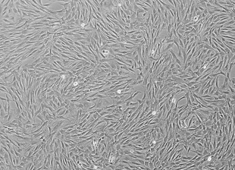
OriCell™ F344 Rat Bone Marrow Mesenchymal Stem Cells are isolated from the bone marrow of healthy F344 rats. These cells exhibit robust proliferation and multipotent differentiation potential, making them a valuable cell model for studying proliferation, aging, immune regulation, differentiation, and transplantation.
When citing our products in academic publications, please use the following format: “OriCell™ [Product Name] + [Catalog Number], from Cyagen Biosciences.”
Product Information
| Product Name | OriCell™ F344 Rat Bone Marrow Mesenchymal Stem Cells |
| Catalog Number | RAFMX-01001 |
| Amount of Cells | 1×10⁶ cells/vial |
| Passage Number | P2 |
| Storage at | Liquid Nitrogen (-196℃) |
QC
- Pass the detection of bacteria, fungi, mycoplasma, and endotoxins.
- Verified by cell recovery testing, with a post-thaw viability of >80%.
- Verified by cell cycle analysis, with a doubling time < 72 h.
- Verified by flow cytometry: Positive for CD29, CD44, and CD90 (> 70%); Negative for CD34, CD45, and CD11b (< 5%).
- Proven differentiation potential into osteoblasts, adipocytes, and chondrocytes.
Please refer to "COA" for details.
General Handling Principles
- Maintain strict aseptic technique. Ensure complete sterility throughout all procedures, particularly within the laminar flow hood and incubator.
- Follow standardized protocols. Adhere strictly to the product manual. Implement rigorous control over experimental variables and include appropriate parallel controls.
- Use high-quality consumables and reagents. This product requires culture vessels suitable for adherent cell growth, and the reuse of these vessels is not recommended. The reagents used must be validated for reliability, cell compatibility, and batch-to-batch consistency.
- Prioritize low-passage cells. Generally, bone marrow mesenchymal stem cells have limited ability to proliferate in vitro and cannot maintain their differentiation potential for a long time. Leveraging our extensive cell culture expertise and optimized culture systems, OriCell™ F344 Rat Bone Marrow Mesenchymal Stem Cells can be subcultured for more than 5 passages while maintaining their phenotypic integrity and meeting our rigorous quality control standards. However, we always recommend using low-passage cells for research applications.
- Optimize seeding density and subculture. The recommended seeding density for OriCell™ F344 Rat Bone Marrow Mesenchymal Stem Cells is (2.5–4) × 10⁴ viable cells/cm². Since cell growth is highly dependent on donor characteristics and culture conditions, we recommend adjusting the split ratios based on the actual performance of each specific lot and passage.
Note: The cryopreservation medium of this product contains DMSO, which may pose potential risks. Please handle it with care.
Thawing and Culturing of Cells
Materials Required
- OriCell™ F344 Rat Bone Marrow Mesenchymal Stem Cells (Cat. No.: RAFMX-01001)
- OriCell™ Complete Medium For Rat Bone Marrow Mesenchymal Stem Cells (Cat. No.: RAXMX-90011)
- Steps
Note: If thawing is planned within 24 hours of receipt, store the cells in an ultra-low temperature freezer at -80 °C. For long-term storage (>24 hours) , keep them in liquid nitrogen. Before thawing, transfer the cells from liquid nitrogen to -80 °C and hold them there for 10 minutes. This will allow any residual liquid nitrogen to evaporate and prevent vial explosion.
- Pre-warm the water bath to 37 °C.
- Warm the complete medium to 37 °C.
- Add at least 5 mL of pre-warmed complete medium to a 15 mL centrifuge tube for subsequent use.
- Remove the cryovial containing cells from the −80°C freezer, immerse it in the 37 °C water bath, and gently and quickly swirl to thaw the cryopreservation medium.
Note:
- Gently swirl the cryovial during thawing to ensure rapid and uniform thawing.
(2) Avoid submerging the cap in water to prevent contamination.
(3) Stop thawing in the water bath when only a single ice crystal (approximately 2 mm in diameter) remains, then continue gently swirling the vial until it is completely thawed.
- Wipe the outer surface of the cryovial with 75% ethanol.
- In a biosafety cabinet, open the cryovial and transfer the cell suspension to the prepared centrifuge tube using a Pasteur pipette.
- Rinse the cryovial once with 1 mL of complete medium to collect residual cells and minimize loss.
- Centrifuge the cell suspension at 250 × g for 4 minutes.
Note: Please calculate the corresponding rotational speed using the formula: RCF = 1.118 × 10⁻⁵ × r × RPM2 (where RCF is the relative centrifugal force, r is the rotor radius in cm, and RPM is the rotational speed).
- Carefully remove the supernatant after centrifugation. Add 2 mL of complete medium, gently resuspend the cell pellet by pipetting up and down to mix thoroughly.
- Seed the cells into a T25 flask or culture vessel with an equivalent growth surface area. Add sufficient complete medium so that the total volume in a T25 flask is no less than 5 mL.
- Gently swirl the flask to evenly distribute the cells, then incubate in a CO₂ incubator at 37 °C with 5% CO₂ and saturated humidity.
Note: Do not move or observe the cells within the first 2 hours after seeding, as this may impair cell adhesion, causing poor morphology, clumping, and uneven attachment.
- On the day after recovery, observe cell status and either replace the medium with fresh complete medium or passage the cells as needed.
Note: If an excessive number of floating cells or any abnormal conditions are observed, investigate promptly and contact us for assistance.
- Replace the complete medium every 2 days until the cells reach approximately 90% confluence, at which point they are ready for passage.
Passaging of Cells
Materials Required
- OriCell™ 0.25% Trypsin-0.04% EDTA Solution (Cat. No.: TEDTA-10001)
- OriCell™ Phosphate-Buffered Saline Solution (1X) (Cat. No.: PBS-10001)
- OriCell™ Complete Medium For Rat Bone Marrow Mesenchymal Stem Cells (Cat. No.: RAXMX-90011)
Steps
- Pre-warm the complete medium, PBS and trypsin to 37°C.
- Remove the medium in the culture vessel.
- Gently wash the cells twice with PBS (approximately 3 mL for a T25 flask and 6 mL for a T75 flask). Ensure thorough washing but avoid excessive force. Then remove the PBS.
- Add trypsin (approximately 1.5 mL for a T25 flask and 3 mL for a T75 flask), quickly spread it to ensure full coverage of the cell layer.
- Observe the cells under a microscope. When approximately 70% to 80% of the cells have shrunk and become round, gently tap the outer wall of the culture vessel to detach the cells from the surface.
- Immediately add complete medium (approximately 3 mL for a T25 flask and 6 mL for a T75 flask), then gently swirl the culture vessel to mix the medium and trypsin, stopping the digestion process.
- Collect the cell suspension using a pipette, gently pipetting along the bottom of the vessel several times to ensure maximal recovery of the cells.
Note: Pipetting should be performed gently to avoid creating excessive bubbles, as this may cause cell damage or loss.
- Transfer the cell suspension to a centrifuge tube. Rinse the culture vessel once with PBS (approximately 3 mL for a T25 flask and 6 mL for a T75 flask) to collect residual cells and add the wash to the centrifuge tube.
- Centrifuge all collected cell suspensions at 250 × g for 4 minutes.
- Carefully remove the supernatant after centrifugation. Add 2 mL of complete medium and gently resuspend the cell pellet by pipetting up and down to thoroughly mix.
- Seed the cells into a suitable culture vessel at a density of (2.5–4) × 104 viable cells/cm², or adjust the seeding density based on the actual growth conditions of the cells.
Note: We recommend manual cell counting where possible to obtain an accurate concentration for seeding. If precise counting is not feasible, subculturing at an appropriate ratio is a reliable alternative. Typically, OriCell™ F344 Rat Bone Marrow Mesenchymal Stem Cells are passaged at a ratio of 1:3, with cells reaching confluence within 72 hours. Please adjust the subculture ratio based on the actual growth of the cells.
- Gently agitate the vessel to ensure uniform cell distribution and place it in an incubator at 37 °C, 5% CO₂, and saturated humidity.
- On the day after passaging, observe the cell condition. If a significant number of floating cells are present, replace the culture medium.
- Replace the culture medium every 2 days. When cells reach 90% confluence, passage or cryopreserve the cells.
Note: Under normal conditions, the growth time of OriCell™ F344 Rat Bone Marrow Mesenchymal Stem Cells does not exceed 72 hours per generation, and there is no need to change the medium. Frequent medium replacement may disrupt the established cellular microenvironment.
Cryopreservation of Cells
Materials Required
- OriCell™ NCR Protein-Free Cryopreservation Medium For General Use (Cat. No.: NCPF-10001)
- OriCell™ NCR Cryopreservation Medium For General Use (Cat. No.: NCRC-10001)
Steps
- Cells should be cryopreserved once they reach an appropriate density or confluence suitable for passaging.
- For cell digestion, please refer to passaging steps 1-9 above.
- After centrifugation, aspirate the supernatant and gently resuspend the cell pellet in an appropriate volume of cryopreservation medium.
- Aliquot the cells into cryovials according to the desired cell number or proportion.
Note: If accurate cell counting is not feasible, we recommend aliquoting cells proportionally for freezing. Prolonged exposure to non-culture conditions will significantly compromise cell viability. Maintain the cells at 4°C during counting to minimize metabolic activity and preserve cell integrity.
- When using any of the recommended NCR cryopreservation media above, cryovials can be placed directly into a -80 °C freezer.
Note: Avoid opening the freezer door during the first 4 hours of freezing, as temperature fluctuations can adversely affect cell viability.
- After approximately 8 hours, transfer the cryovials to liquid nitrogen for long-term storage.
Note: Do not store the cryovials at -80 °C for more than 48 hours.
Cyagen Biosciences (Suzhou) Inc. reserves all rights to the technical documents of OriCell™ cell culture products. Without the written permission of Cyagen Biosciences (Suzhou) Inc. any part of this document shall not be adapted or reprinted for other commercial purposes.
-
Protective effects of bone marrow mesenchymal stem cells with stable expression of Bcl-2 on ischemia-hypoxia of hippocampal neurons.
SCI RES ESSAYS SCIRESESSAYS Year 2011
-
Image-guided stem cells with functionalized self-assembling peptide nanofibers for treatment of acute myocardial infarction in a mouse model.
AM J TRANSL RES 9:3723-3731 (2017) IF = 2.829 Year 2017