EN
EN
C57BL/6 Mouse Cortical Astrocytes
Introduction
Astrocytes are star-shaped glial cells found in the brain and spinal cord. They play a crucial role in the formation of the blood-brain barrier (BBB), supplying nutrients to neural tissues, maintaining extracellular ionic balance, and facilitating the repair of brain and spinal cord injuries.
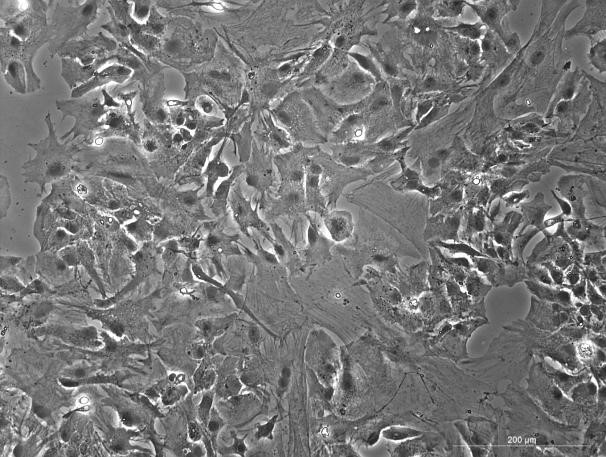
As the most widely distributed and largest type of glial cell in the mammalian brain, astrocytes possess distinct morphological characteristics. When visualized using classic metal impregnation techniques (silver staining), these cells exhibit a stellate morphology with numerous long, branched processes extending from the cell body. These processes fill the spaces between neuronal cell bodies and their projections, thereby providing structural support and isolating neurons. The ends of these processes often expand to form endfeet (also known as pedicels). Some of these endfeet, attaching to the walls of adjacent capillaries, are known as "vascular feet" or "perivascular endfeet". Meanwhile, those near the surface of the brain and spinal cord attach to the inner surface of the pia mater, connecting to form the glia limitans.
OriCell™ C57BL/6 Mouse Cortical Astrocytes are isolated from the cerebral cortex of neonatal mice, retaining these characteristic morphological and functional properties. These cells provide a reliable in vitro model for investigating astrocyte biology and neurovascular regulation, as well as for studying BBB formation, neurotrophic support, and mechanisms of CNS (central nervous system) injury repair.
When citing our products in academic publications, please use the following format: "OriCell™ [Product Name] + [Catalog Number], from Cyagen Biosciences."
Product Information
| Product Name | OriCell™ C57BL/6 Mouse Cortical Astrocytes |
| Catalog Number | BCCAC-00001 |
| Amount of Cells | 1×10⁶ cells/vial |
| Passage Number | P2 |
| Storage at | Liquid Nitrogen (-196℃) |
QC
- Pass the detection of bacteria, fungi, mycoplasma, and endotoxins.
- Verified by cell recovery viability testing, with a post-thaw survival rate >80%.
- Verified by cell cycle analysis, with a doubling time < 72 h.
- Verified by immunofluorescence (IF): Positive for GFAP (≥ 80%); Negative for β-tubulin III (≤ 10%) and Galc (≤ 10%).
Please refer to "COA" for details.
General Handing Principles
- Maintain strict aseptic technique. Ensure complete sterility throughout all procedures, particularly within the laminar flow hood and incubator.
- Follow standardized protocols. Adhere strictly to the product manual. Implement rigorous control over experimental variables and include appropriate parallel controls.
- Use high-quality consumables and reagents. This product requires culture vessels suitable for adherent cell growth, and the reuse of these vessels is not recommended. The reagents used must be validated for reliability, cell compatibility, and batch-to-batch consistency.
- Prioritize low-passage cells. Generally, cortical astrocytes have limited ability to proliferate in vitro and cannot maintain their differentiation potential for a long time. Leveraging our extensive cell culture expertise and optimized culture systems, OriCell™ C57BL/6 Mouse Cortical Astrocytes can be subcultured for more than 3 passages while maintaining their phenotypic integrity and meeting our rigorous quality control standards. However, we always recommend using low-passage cells for research applications.
- Optimize seeding density and subculture. The recommended seeding density for OriCell™ C57BL/6 Mouse Cortical Astrocytes is (3–4) × 10⁴ viable cells/cm². Since cell growth is highly dependent on donor characteristics and culture conditions, we recommend adjusting the split ratios based on the actual performance of each specific lot and passage.
- Refreezing of the cells after thawing is not recommended.
Warm Notice: The cryopreservation medium of this product contains DMSO, which may pose potential risks. Please handle it with care.