EN
EN
MDBK Bovine Kidney Cell Line
Introduction
The Madin-Darby bovine kidney (MDBK) cell line was originally established on February 18, 1957, by S. H. Madin and N. B. Darby from the kidney of an apparently normal adult bovine. This cell line was first obtained from the ATCC in July 1967 at passage 96 and stored in frozen ampoules (F-145). In 1973, it was discovered that this particular lineage was contaminated with Bovine Viral Diarrhea Virus (BVDV), which limited its application in certain fields. In 1982, a BVDV-free MDBK cell line was identified, and subsequent testing by the NVSL (National Veterinary Services Laboratories) found no evidence of viral contamination.
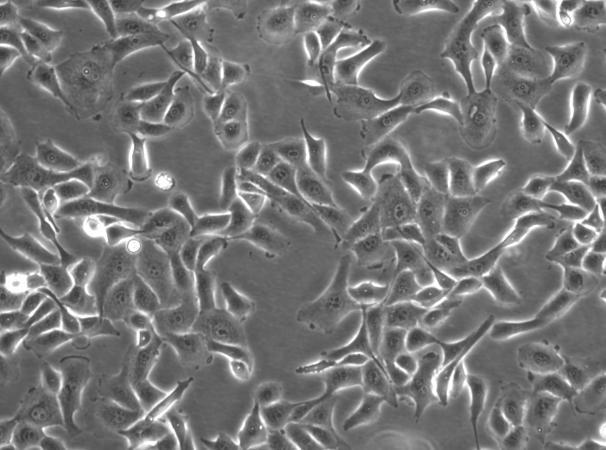
OriCell™ MDBK Bovine Kidney Cell Line is a classic bovine kidney epithelial cell line widely used in veterinary medicine, virology, and vaccine development. Its stable growth characteristics and susceptibility to a variety of viruses make it a commonly used in vitro model in laboratory research.
When citing our products in academic publications, please use the following format: "OriCell™ [Product Name] + [Catalog Number], from Cyagen Biosciences."
Product Information
| Product Name | OriCell™ MDBK Bovine Kidney Cell Line |
| Alternative Name | MDBK |
| Catalog Number | B4-0201 |
| Amount of Cells | 1×10⁶ cells/vial |
| Tissue Origin | Bovine Kidney |
| Cell Characteristics | Adherent Growth; Epithelial-like |
| Culture Conditions | 95% air ; 5% CO2 ; 37 ℃ |
| Culture Medium | RPMI-1640 + 10% FBS |
| Doubling Time | 12 ~ 24 h |
| Biosafety Level | 2 |
| Storage at | Liquid Nitrogen (-196 ℃) |
| Precautions | —— |
QC
- Pass the detection of bacteria, fungi, mycoplasma, and endotoxins.
- Verified by cell recovery viability testing.
- Verified by STR analysis.
Please refer to "COA" for details.
General Handling Principles
- Maintain strict aseptic technique. Ensure complete sterility throughout all procedures, particularly within the laminar flow hood and incubator.
- Follow standardized protocols. Adhere strictly to the product manual. Implement rigorous control over experimental variables and include appropriate parallel controls.
- Use high-quality consumables and reagents. This product requires culture vessels suitable for adherent growth, and the reuse of these vessels is not recommended. The reagents used must be validated for reliability, cell compatibility, and batch-to-batch consistency.
Warm Notice: The cryopreservation medium of this product contains DMSO, which may pose potential risks. Please handle it with care.