EN
EN
MC3T3-E1 Subclone 24 Mouse Calvarial Preosteoblast Subclone 24 Cell Line
Introduction
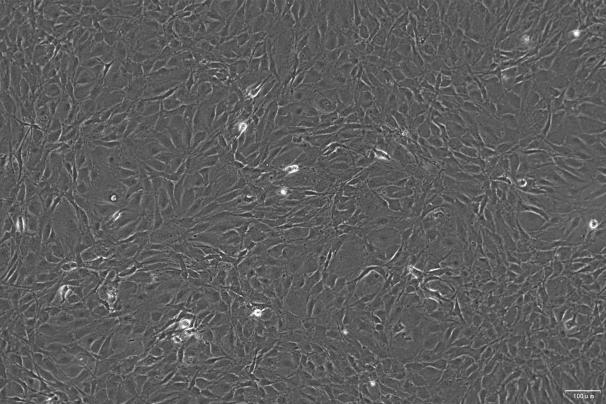
The MC3T3-E1 Subclone 24 cell line is a subclone derived from the MC3T3-E1 series. The parental MC3T3-E1 cells were originally isolated from the calvarial tissue of neonatal C57BL/6 mice. MC3T3-E1 Subclone 24 is characterized by its low osteogenic differentiation potential and is commonly used as a negative control for highly osteogenic subclones such as Subclone 4 and Subclone 14.
OriCell™ MC3T3-E1 Subclone 24 Mouse Calvarial Preosteoblast Subclone 24 Cell Line is primarily used to study the mechanisms underlying osteogenic differentiation and mineralization. Due to its limited osteogenic differentiation capacity, it serves as a negative control model in comparative studies with highly osteogenic subclones such as Subclone 4. When cultured in medium supplemented with ascorbic acid, MC3T3-E1 Subclone 24 fails to form a mineralized extracellular matrix. However, it remains capable of producing collagen and expressing basal levels of the osteogenesis-related transcription factor Osf2/Cbfa1.
When citing our products in academic publications, please use the following format: "OriCell™ [Product Name] + [Catalog Number], from Cyagen Biosciences."
Product Information
| Product Name | OriCell™ MC3T3-E1 Subclone 24 Mouse Calvarial Preosteoblast Subclone 24 Cell Line |
| Alternative Name | MC3T3-E1 Subclone 24 |
| Catalog Number | M7-1001 |
| Amount of Cells | 1×10⁶ cells/vial |
| Tissue Origin | Mouse Bone |
| Cell Characteristics | Adherent Growth; Fibroblast-like |
| Culture Conditions | 95% air; 5% CO2; 37 ℃ |
| Culture Medium | DMEM + 10% FBS |
| Doubling Time | 48 ~ 72 h |
| Biosafety Level | 1 |
| Storage at | Liquid Nitrogen (-196 ℃) |
| Precautions | —— |
QC
- Pass the detection of bacteria, fungi, mycoplasma, and endotoxins.
- Verified by cell recovery viability testing.
- Verified by STR analysis.
Please refer to "COA" for details.
General Handling Principles
- Maintain strict aseptic technique. Ensure complete sterility throughout all procedures, particularly within the laminar flow hood and incubator.
- Follow standardized protocols. Adhere strictly to the product manual. Implement rigorous control over experimental variables and include appropriate parallel controls.
- Use high-quality consumables and reagents. This product requires culture vessels suitable for adherent growth, and the reuse of these vessels is not recommended. The reagents used must be validated for reliability, cell compatibility, and batch-to-batch consistency.
Warm Notice: The cryopreservation medium of this product contains DMSO, which may pose potential risks. Please handle it with care.