EN
EN
KLN 205 Mouse Lung Squamous Cell Carcinoma Cell Line
Introduction
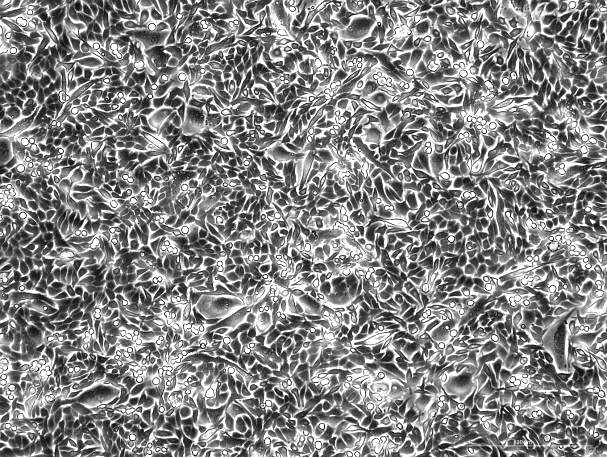
KLN 205 Cell Line is derived from the lung tissue of a DBA/2 mouse with spontaneous lung squamous cell carcinoma. The cells exhibit a typical epithelial-like morphology, growing in adherent culture with tight intercellular junctions and a distinctive cobblestone appearance. As a highly tumorigenic and immortalized cell line, KLN 205 possesses a strong proliferative capacity with a doubling time of approximately 24–48 hours. It can be maintained stably through continuous in vitro passages while retaining robust and reliable tumorigenic potential in vivo, making it an invaluable experimental tool in lung cancer research.
KLN 205 is renowned for its exceptional lung colonization and metastatic capabilities. Upon intravenous injection, it consistently forms numerous metastatic nodules in the lung tissue, serving as a classic model for studying the mechanisms of spontaneous tumor metastasis. This cell line is widely utilized for anti-tumor drug screening, particularly in the efficacy evaluation of candidates targeting lung squamous cell carcinoma. Additionally, it provides an effective platform for exploring the inhibitory effects of natural products or compounds on tumor initiation and progression.
In syngeneic graft models, KLN 205 can establish stable tumors within immunocompetent DBA/2 mice, offering a critical model for assessing systemic drug efficacy and potential toxicities. Beyond traditional models, the cell line is extensively applied in 3D cell culture, tumor microenvironment studies, and other sophisticated research frameworks. Given its high stability and compatibility with immunocompetent animal models, KLN 205 holds broad application prospects in the fields of cancer biology and immunotherapy research.
OriCell™ KLN 205 Mouse Lung Squamous Cell Carcinoma Cell Line has undergone rigorous quality control to ensure it is free from bacterial, fungal, and mycoplasma contamination. Long-term in vitro culture data have demonstrated that this cell line maintains stable passaging and superior tumorigenicity, providing a reliable and reproducible experimental foundation for scientific research.
When citing our products in academic publications, please use the following format: "OriCell™ [Product Name] + [Catalog Number], from Cyagen Biosciences."
Product Information
| Product Name | OriCell™ KLN 205 Mouse Lung Squamous Cell Carcinoma Cell Line |
| Alternative Name | KLN 205 |
| Catalog Number | M0-0201 |
| Amount of Cells | 1×10⁶ cells/vial |
| Tissue Origin | Mouse Lung |
| Cell Characteristics | Adherent Growth; Epithelial-like |
| Culture Conditions | 95% air; 5% CO2; 37 ℃ |
| Culture Medium | DMEM + 10% FBS |
| Doubling Time | 24 ~ 48 h |
| Biosafety Level | 1 |
| Storage at | Liquid Nitrogen (-196 ℃) |
| Precautions | —— |
QC
- Pass the detection of bacteria, fungi, mycoplasma, and endotoxins.
- Verified by cell recovery viability testing, with a post-thaw survival rate >90%.
- Verified by STR analysis.
Please refer to "COA" for details.
General Handling Principles
- Maintain strict aseptic technique. Ensure complete sterility throughout all procedures, particularly within the laminar flow hood and incubator.
- Follow standardized protocols. Adhere strictly to the product manual. Implement rigorous control over experimental variables and include appropriate parallel controls.
- Use high-quality consumables and reagents. This product requires culture vessels suitable for adherent cell growth, and the reuse of these vessels is not recommended. The reagents used must be validated for reliability, cell compatibility, and batch-to-batch consistency.
Warm Notice: The cryopreservation medium of this product contains DMSO, which may pose potential risks. Please handle it with care.