EN
EN
CRFK Cat Kidney Cell Line
Introduction
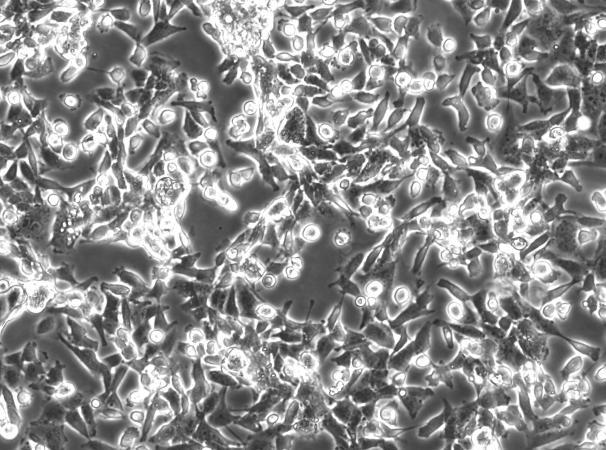
CRFK (Crandell–Rees Feline Kidney) cells are derived from the renal cortex of a female domestic cat and exhibit a typical epithelial-like morphology with adherent growth. These cells are highly sensitive to a wide range of feline and non-feline viruses. Upon reaching confluence, they form a compact and uniform monolayer with stable cellular morphology.
CRFK cells are easy to culture, require minimal culture condition optimization, and show excellent passaging performance, making them suitable for large-scale expansion. In addition to serving as a preferred host for viral amplification, CRFK cells are widely used in transfection experiments and are an ideal model for generating stable gene-expressing cell clones.
As a representative feline-derived model, CRFK is widely applied in toxicological assessments to evaluate the effects of pet food ingredients, veterinary pharmaceuticals, and environmental chemicals on feline renal cells. In fundamental research, it is a pivotal system for investigating the infection mechanisms of Feline Immunodeficiency Virus (FIV) and for screening antiviral compounds. Furthermore, the cell line is increasingly employed to explore the protective mechanisms of natural products (such as Poria cocos polysaccharide, PCP) against Lipopolysaccharide (LPS)-induced inflammatory injury.
OriCell™ CRFK Cat Kidney Cell Line has undergone rigorous quality control to ensure it is free from bacterial, fungal, and mycoplasma contamination. Long-term in vitro culture data have demonstrated that this cell line maintains stable passaging, providing a reliable and reproducible experimental foundation for scientific research.
When citing our products in academic publications, please use the following format: "OriCell™ [Product Name] + [Catalog Number], from Cyagen Biosciences."
Product Information
| Product Name | OriCell™ CRFK Cat Kidney Cell Line |
| Alternative Name | CRFK |
| Catalog Number | C4-0201 |
| Amount of Cells | 1×10⁶ cells/vial |
| Tissue Origin | Cat Kidney |
| Cell Characteristics | Adherent Growth; Epithelial-like |
| Culture Conditions | 95% air; 5% CO2; 37 ℃ |
| Culture Medium | DMEM + 10% FBS |
| Doubling Time | 30 ~ 48 h |
| Biosafety Level | 1 |
| Storage at | Liquid Nitrogen (-196 ℃) |
| Precautions | —— |
QC
- Pass the detection of bacteria, fungi, mycoplasma, and endotoxins.
- Verified by cell recovery viability testing.
- Verified by STR analysis.
Please refer to "COA" for details.
General Handling Principles
- Maintain strict aseptic technique. Ensure complete sterility throughout all procedures, particularly within the laminar flow hood and incubator.
- Follow standardized protocols. Adhere strictly to the product manual. Implement rigorous control over experimental variables and include appropriate parallel controls.
- Use high-quality consumables and reagents. This product requires culture vessels suitable for adherent cell growth, and the reuse of these vessels is not recommended. The reagents used must be validated for reliability, cell compatibility, and batch-to-batch consistency.
Warm Notice: The cryopreservation medium of this product contains DMSO, which may pose potential risks. Please handle it with care.