EN
EN
9L/lacZ Rat Gliosarcoma Cell Line
Introduction
Rat gliosarcoma cell line (9L/lacZ) was developed in 1989 from the 9L cell line, which was originally induced from rat brain tumors (gliomas). The 9L cells were infected with a replication-defective retroviral vector carrying the E. coli lacZ gene encoding β-galactosidase and the Tn5 neomycin resistance gene (BAG), conferring G418 resistance. Cells were cultured in the presence of G418 for 14 days, followed by cloning and screening for β-galactosidase expression, resulting in the successful establishment of the 9L/lacZ cell line.
OriCell™ 9L/lacZ Rat Gliosarcoma Cell Line is widely used in studies of glioma biology, tumor microenvironment and its interaction with the immune system, as well as drug development and therapeutic research.
When citing our products in academic journals, please indicate "OriCell™ + Catalog Number, from Cyagen Biosciences."
Product Information
| Product Name | OriCell™ 9L/lacZ Rat Gliosarcoma Cell Line |
| Alternative Name | 9L/LacZ |
| Catalog Number | R8-0401 |
| Amount of Cells | 1×10⁶ cells/vial |
| Tissue Origin | Rat Brain |
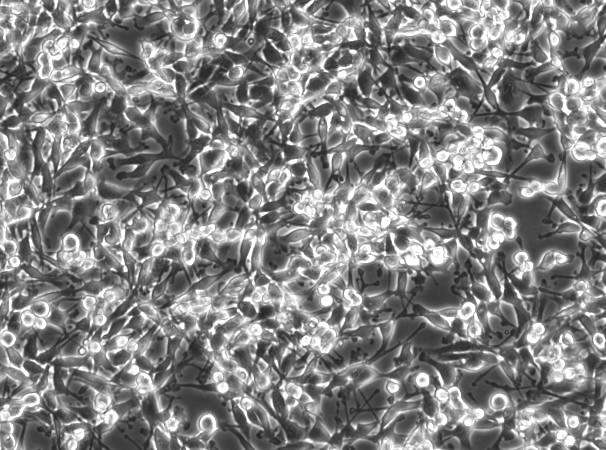
| Cell Characteristics | Adherent Growth; Fibroblast-like |
| Culture Conditions | 95% air; 5% CO2; 37 ℃ |
| Culture Medium | DMEM + 10% FBS |
| Doubling Time | 48 ~ 72 h |
| Biosafety Level | 1 |
| Storage at | Liquid Nitrogen (-196 ℃) |
| Precautions | —— |
QC
- Tested for bacteria, fungi, mycoplasma, and endotoxins.
- Tested for cell viability and recovery.
- Confirmed by short tandem repeat (STR) analysis.
Please refer to "COA" for details.
General Handing Principles
- Strict sterile environment. Ensure the cleanliness of the entire laboratory, laminar flow hood, and incubator.
- Follow standardized operating procedures. Adhere to the instructions described in the product manual, strictly control variables, and conduct appropriate control experiments.
- Use appropriate and high-quality consumables and reagents. This product requires culture vessels suitable for adherent cell growth, and their reuse is not recommended. The reagents used must be validated for reliability, suitable for cell growth, and exhibit minimal batch-to-batch variation.