
 EN
EN
How to Improve MSC Osteogenic Differentiation Efficiency: A Practical Guide from OriCell Scientists
Mesenchymal stem cells (MSCs) are multipotent stem cells that can be isolated from various tissues of human and animal origins, including bone marrow, adipose tissue, and other connective tissues. This is also a common topic in Reddit discussions and lab forums, where researchers often ask why MSC osteogenic differentiation results vary between batches, why calcium nodules are weak or absent, and how to optimize induction conditions. After isolation and expansion in vitro, MSCs can be induced to differentiate into multiple cell types, including osteoblasts, adipocytes, chondrocytes, as well as tendon- and ligament-related cells under specific culture conditions.
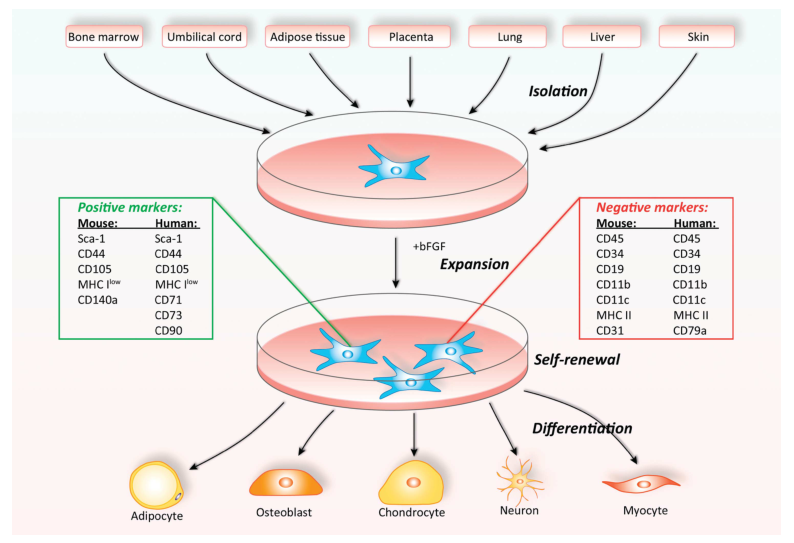
Figure 1. Sources, characterization markers, and differentiation potential of MSCs [1]
Tri-lineage differentiation, including osteogenic, adipogenic, and chondrogenic differentiation, is widely recognized as a standard approach for evaluating the multipotent differentiation capacity of MSCs. Among these assays, osteogenic differentiation is frequently used to study bone formation mechanisms, evaluate stem cell functionality, and establish in vitro models for regenerative medicine research.
However, achieving consistent osteogenic differentiation results can be challenging. Factors such as cell quality, passage number, induction conditions, culture environment, and detection methods can significantly influence experimental outcomes.
In our previous article, OriCell scientists summarized common challenges encountered during MSC tri-lineage differentiation experiments and provided practical troubleshooting strategies. In this article, we will focus on MSC osteogenic differentiation, introducing the fundamental principles, commonly used evaluation methods, and key considerations for establishing a reliable osteogenic differentiation workflow.
The following section outlines the experimental workflow.
01 Required Materials
- •OriCell Mesenchymal Stem Cell Osteogenic Differentiation Medium Kit, containing basal medium, premium fetal bovine serum, osteogenic induction supplements, Alizarin Red staining solution, and gelatin.
- •OriCell Phosphate-Buffered Saline Solution (1× PBS), Cat. No. PBS-10001.
- •4% paraformaldehyde solution or 10% formalin solution.
02 Experimental Procedure
- Add 1 mL of 0.1% gelatin to each well of a 6-well plate and gently shake the plate to ensure that the bottom of each well is evenly covered.
- Place the 6-well plate coated with 0.1% gelatin in a biosafety cabinet or CO₂ incubator for at least 30 min.
- After 30 min, aspirate the gelatin solution. The plate can then be used for cell seeding, or it can be allowed to dry before seeding.
- Seed the mesenchymal stem cells to be induced into the 6-well plate at a density of 2 × 10⁴ cells/cm². Add 2 mL of regular complete medium to each well.
- Culture the cells in a CO₂ incubator at 37°C, 5% CO₂, and saturated humidity.
- When the cells reach 70% confluence, carefully aspirate the complete medium from each well and add 2 mL of OriCell Mesenchymal Stem Cell Osteogenic Differentiation Medium to each well.
- Replace with fresh OriCell Mesenchymal Stem Cell Osteogenic Differentiation Medium every 3 days.
- After 2–4 weeks of induction, perform Alizarin Red staining based on cell morphology and growth status.
03 Alizarin Red Staining
- After osteogenic induction is complete, aspirate the osteogenic differentiation complete medium from the 6-well plate and gently wash the cells 2–3 times with 1× PBS.
- Add 2 mL of 4% paraformaldehyde solution or 10% formalin solution to each well and fix at room temperature for 30 min.
- Aspirate the fixative and gently wash the cells 2–3 times with 1× PBS to ensure that the fixative is thoroughly removed.
- Add 2 mL of Alizarin Red working solution to each well and stain at room temperature for 5–10 min.
- Aspirate the Alizarin Red staining solution and gently wash the cells 2–3 times with 1× PBS to thoroughly remove excess staining solution.
- Add 2 mL of 1× PBS to each well and observe the osteogenic staining results under a microscope.
- After staining, the 6-well plate can be sealed with sealing film and stored at 4°C for 2 weeks.
FAQ
Q1: How should the OriCell osteogenic differentiation kit be prepared and stored?
A: Prepare the required volume according to the ratio of each component provided in the OriCell kit. Any remaining components must be stored strictly according to their respective storage conditions and should not be repeatedly frozen and thawed.
Q2: How can osteoblast detachment and calcium nodule loss be reduced during osteogenic induction?
A: After obvious calcium nodules appear during osteogenic induction, half-medium changes every 2 days are recommended to help prevent osteoblast detachment and calcium nodule loss.
Q3: How should the culture plate be handled during induction and staining?
A: All operations should be performed as gently as possible to prevent calcium nodules from detaching.
Q4: How should Alizarin Red staining solution be handled before use?
A: Alizarin Red staining solution should be brought to room temperature before use. If the staining result is weak, the staining time can be extended appropriately.
Q5: When should Alizarin Red staining be performed?
A: Staining should be performed only after calcium nodules are confirmed.
OriCell Stem Cell Induced Differentiation Solutions
Based on a mature stem cell technology platform, Cyagen OriCell can provide experimental services for studying the differentiation potential of various stem cells.
OriCell also offers induction differentiation kits optimized and customized for specific species. These kits support differentiation toward multiple lineages, including osteogenic, adipogenic, chondrogenic, and hepatogenic directions. They are designed to provide stable performance and strong induction outcomes.
In addition, we can perform specific stem cell induction experiments using the induction reagents and induction methods provided by researchers. We can also develop a relatively optimized induction workflow based on your research goals and requirements across different stem cell induction pathways.
OriCell Osteogenic Differentiation Media
Image Source
- Fate decision of mesenchymal stem cells: adipocytes or osteoblasts? Cell Death and Differentiation. 2016;23:1128–1139. doi:10.1038/cdd.2015.168. Published online February 12, 2016.

