
 EN
EN
Unlocking the Neural Universe: A Practical Guide to Astrocyte Isolation and Extraction
Why Are Astrocytes Important in Neuroscience Research?
Astrocytes, named for their star-like shape, are one of the most abundant types of glial cells in the central nervous system (CNS). Located in the brain and spinal cord, astrocytes play essential roles in maintaining the blood–brain barrier, supporting neuronal function, regulating extracellular ion balance, and contributing to neural repair after brain and spinal cord injuries.
Cortical astrocytes serve as valuable research tools in neuroscience, enabling scientists to investigate the maintenance of the CNS microenvironment, neuronal metabolism, neurotransmitter regulation, and disease mechanisms associated with neurological disorders such as Parkinson’s disease and Alzheimer’s disease.
At OriCell, our scientists have been continuously exploring cell culture technologies and developing reliable cell resources to support neuroscience research. Among our extensive collection of high-quality cell resources, astrocytes have attracted increasing attention due to their critical roles in understanding brain function and neurological diseases.
Inspired by the concept of “reaching for the stars”, our neuroscience team has prepared this practical guide to share our experience in astrocyte research. In this article, we will walk you through the key principles and procedures of primary astrocyte isolation and extraction, helping researchers better understand how to obtain and culture these important neural cells.
Primary Astrocyte Isolation: Step-by-Step Procedures for Capturing the Stars of Neuroscience
OriCell SD Rat Cortical Astrocytes are isolated from the cerebral cortex of neonatal SD rats.
Experimental Materials
| Category | Materials |
|---|---|
| Sample | Neonatal SD rats aged 1–3 days |
| Reagents | OriCell Complete Medium For Rat Cortical Astrocytes, OriCell Phosphate-Buffered Saline Solution (1X), OriCell Penicillin-Streptomycin Solution (100X), and OriCell Poly-L-lysine Solution |
| Consumables and instruments | 10 cm culture dishes, 6 cm culture dishes, ophthalmic forceps (4), ophthalmic scissors (2), micro-forceps (2), micro-scissors (1), 1.5 mL EP tubes, 15 mL centrifuge tubes, and an ice box |
From Tissue to Stars: Primary Astrocyte Tissue Collection and Extraction Workflow
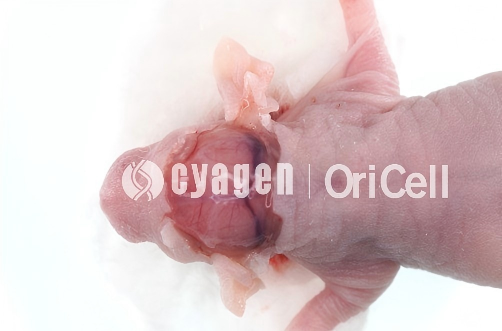
- Expose the neonatal rat brain tissue
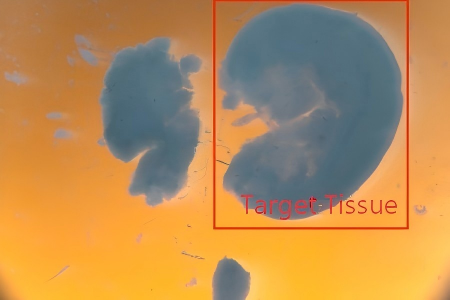
- Preserve the cerebral cortical tissue
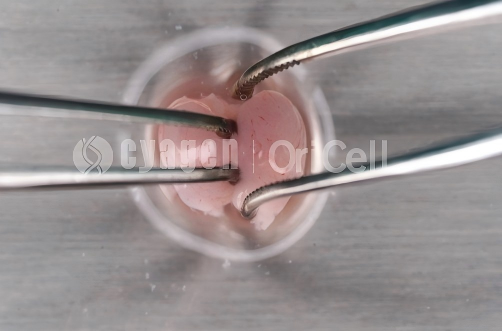
- Remove the neonatal rat brain
-
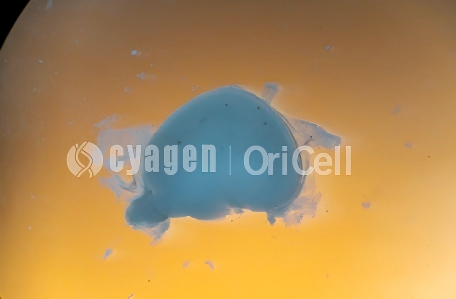
- Remove the meningeal blood vessels and brainstem
Tissue Collection Procedure
- Euthanize the neonatal rat and immerse it in 75% ethanol for 2–3 min.
- In a biosafety cabinet, use ophthalmic forceps to transfer the neonatal rat into a 10 cm dish containing PBS, with its back facing upward.
- First cut open the skin at the neck, then cut along the midline of the neonatal rat’s head. Open the skull, remove the brain, and place it into another culture dish containing PBS.
- Under a stereomicroscope, cut the neonatal rat brain into two halves along the midline. Remove the meninges and brainstem, position the central longitudinal fissure facing upward, and use micro-scissors or micro-forceps to dissect the cerebral cortical tissue. Transfer the tissue into a 1.5 mL EP tube preloaded with 200 μL of complete medium, and keep the tube on ice.
- Carefully pipette the tissue approximately 10 times using a pipette. Avoid generating bubbles during pipetting. Continue pipetting until the cerebral cortical tissue is dissociated into a single-cell suspension, then collect the suspension into a 15 mL centrifuge tube.
- Centrifuge at 265 × g for 4 min, then discard the supernatant.
- Resuspend the cells in 1 mL of Complete Medium For Rat Cortical Astrocytes.
- Take a small aliquot of the cell suspension for cell counting. Adjust the seeding density according to the cell number, and seed the cells into a culture dish coated with Poly-L-lysine Solution.
- Culture the cells in an incubator at 37°C, 5% CO₂, and saturated humidity.
- Observe the cells the next day to assess whether there are many cell fragments or dead cells. A half-medium change or complete medium change may be considered as appropriate.
A Cellular Galaxy Under the Microscope: Astrocyte Morphology and Identification
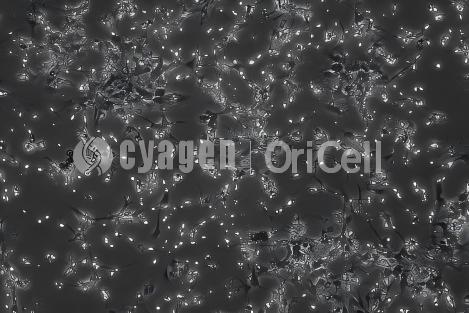
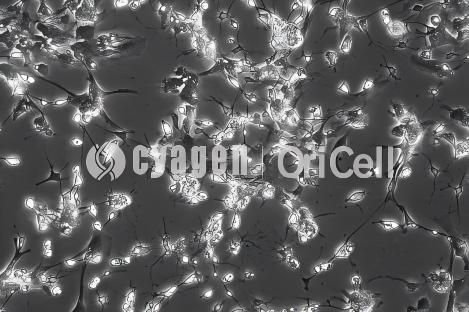
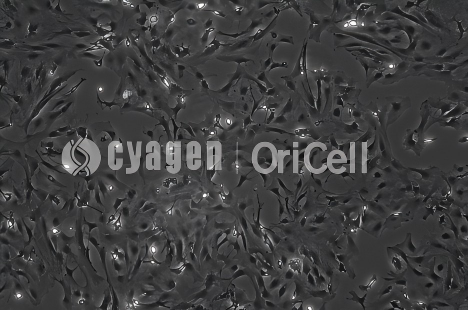
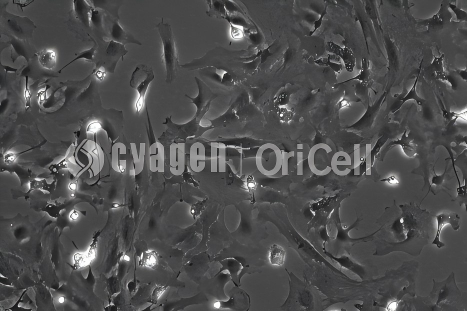
Cell Characterization: OriCell Astrocyte Quality Control Criteria
| Quality Control Item | Acceptance Criteria |
|---|---|
| Microbial safety testing | Cells pass bacterial, fungal, mycoplasma, and endotoxin testing. |
| Post-thaw viability testing | Cells pass post-thaw viability testing, with a post-thaw survival rate >80%. |
| Cell cycle testing | Cells pass cell cycle testing, with a doubling time <72 h. |
| Immunofluorescence identification | Cells express GFAP (≥80%) and do not express β-tubulin III (≤10%) or Galc (≤10%). |
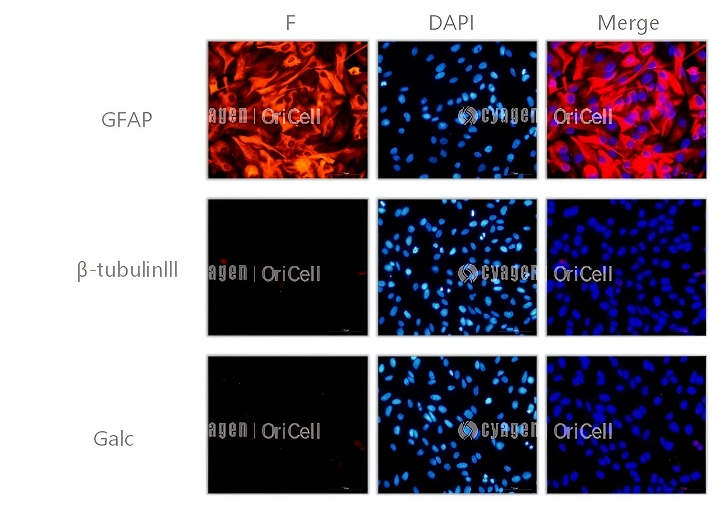
Ensuring Quality in Every Star: Quality Control and Characterization of OriCell Astrocytes
At Cyagen OriCell, we provide astrocytes at passage P2. These cells show stable cellular characteristics and have passed cell identification testing. We also provide matched complete medium to help researchers culture these “stars” more easily and maintain reliable cell growth for downstream neuroscience studies.
OriCell Featured Products
| Type | Product Name | Cat. No. | Size |
|---|---|---|---|
| Primary Cells | OriCell SD Rat Cortical Astrocytes | SCCAC-00001 | 1*10^6/vial |
| Primary Cells | OriCell F344 Rat Cortical Astrocytes | FCCAC-00001 | 1*10^6/vial |
| Primary Cells | OriCell Wistar Rat Cortical Astrocytes | WCCAC-00001 | 1*10^6/vial |
| Cell Culture Media | OriCell Complete Medium For Rat Cortical Astrocytes | RAXAC-90011 | 500mL |
| Cell Culture Media | OriCell Complete Medium For Rat Cortical Astrocytes | RAXAC-80011 | Contact us |
| Cell Culture Media | OriCell Complete Medium For Mouse Cortical Astrocytes | MUXAC-90011 | 500mL |
| Cell Culture Media | OriCell Complete Medium For Mouse Cortical Astrocytes | MUXAC-80011 | Contact us |
About Cyagen OriCell
Cyagen OriCell is a Cyagen brand focused on the research and development of cell biology products, including stem cells, primary cells, and cell lines, as well as cell culture reagents and technical services. Serving universities, research institutes, hospitals, CROs, and CDMOs worldwide, Cyagen OriCell has accumulated extensive expertise in cell isolation and culture. The team has developed "spatial replication" culture technology to rapidly establish growth-supportive environments, and runs an Antibiotic-Free process grounded in strict environmental, materials, and personnel controls. Cyagen OriCell provides end-to-end solutions—from MSC isolation and identification to directed differentiation and assay services.
Cyagen OriCell's offerings are cited in over 10,000 publications, with a cumulative impact factor exceeding 90,000 and more than 160,000 citations, and the team has supported more than 3,000 research groups. Products are used by tens of thousands of customers across dozens of countries and regions.

