
 EN
EN
What Are Dental Pulp Mesenchymal Stem Cells? An Isolation and Culture Guide
Although teeth are best known for their role in mastication, dental pulp contains a valuable population of mesenchymal stem cells with remarkable regenerative potential. Dental pulp mesenchymal stem cells (DPMSCs) have attracted increasing attention because of their accessibility, self-renewal capacity, and ability to differentiate into multiple cell types.
In this article, we would introduce the biological characteristics of DPMSCs, common isolation methods, culture procedures, and key considerations for establishing high-quality primary DPMSC cultures.
What Are Dental Pulp Mesenchymal Stem Cells (DPMSCs)?
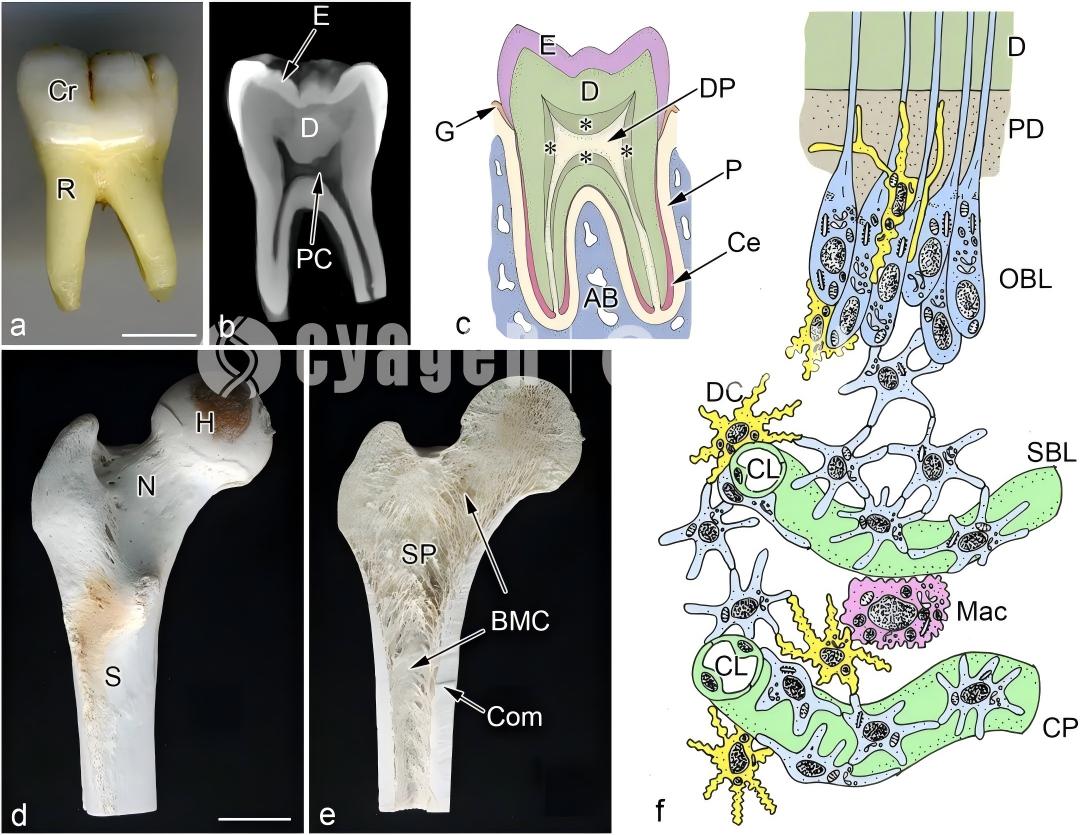
Structurally, a tooth can be divided from top to bottom into the crown, neck, and root, and from the outside inward into enamel, dentin, and dental pulp. The outer layer of the dental pulp contains odontoblasts, while the inner region contains nerves, blood vessels, lymphatic tissue, and connective tissue. Because of this structure, teeth can rapidly detect adverse stimuli that may disrupt normal physiological activity, such as cold, heat, mechanical injury, and pressure, and transmit these signals to the brain to trigger a response.
When a tooth is damaged, the dental pulp also contains a population of mesenchymal stem cells that can be mobilized when needed. These cells can differentiate into tissue-specific cells to repair damaged tissue, or promote wound healing and reduce inflammatory responses through the secretion of multiple factors.
Dental pulp-derived mesenchymal stem cells were first discovered and successfully isolated by Gronthos and colleagues in 2000. Because these cells share surface markers and the ability to form mineralized nodules that are highly similar to bone marrow mesenchymal stem cells, they were named dental pulp mesenchymal stem cells (Dental Pulp Mesenchymal Stem Cells, DPMSCs).
DPMSCs are readily accessible, free of major ethical concerns, and possess strong stemness and biological functionality. As a result, they hold broad application potential in dental and maxillofacial tissue regeneration and repair, extraoral tissue repair, and immunomodulation.
Comparison of the human mandibular first molar (a–c), human femur (d, e), and dental pulp structure (f)
DPMSC Isolation and Culture
Step 0: Material Preparation
Sample: Deciduous teeth from children or wisdom teeth from adults. Collection time should be <12 hours. Sample preservation solution: basal medium + 1% penicillin-streptomycin, 10 mL. Storage temperature: 4°C.
Reagents: OriCell Phosphate-Buffered Saline Solution (1X), OriCell Complete Medium For Human Dental Pulp Mesenchymal Stem Cells, OriCell Collagenase Type I (0.1%), OriCell 0.25% Trypsin-0.04% EDTA Solution, and neutral protease.
Consumables: one 50 mL sterile collection bottle, 5–10 50 mL centrifuge tubes, four 10 mL serological pipettes, and several T25 culture flasks.
Instruments: small handheld rotary tool, small sterilized cutting wheel, a set of pulp broaches in multiple sizes, dental forceps, hemostatic forceps, and ophthalmic scissors.
Step 1: Dental Pulp Tissue Collection
1.1. Take deciduous teeth from children or impacted wisdom teeth from adults. In a culture dish, use a small handheld rotary tool equipped with a sterilized cutting wheel to cut off the tooth crown longitudinally or transversely, and then remove the dental pulp tissue using a pulp broach.
1.2. Place the collected dental pulp tissue into a 1.5 mL EP tube. Rinse the culture dish 2–3 times with OriCell Phosphate-Buffered Saline Solution (1X), collect the rinsing solution, and transfer it into the 1.5 mL EP tube.
Step 2: Dental Pulp Tissue Digestion
2.1. Cut the dental pulp tissue into small pieces using ophthalmic scissors. Prepare the digestion solution at a final concentration ratio of collagenase type I (3 mg/mL) to neutral protease (4 mg/mL) = 1:1. Mix the dental pulp tissue with 1–2 volumes of digestion solution and digest on a shaker at 37°C for 1 hour.
2.2. Gently pipette the tissue fragments to dissociate the cells into a single-cell suspension. Wash once or twice with OriCell Phosphate-Buffered Saline Solution (1X). Pick out any undigested tissue fragments and place them at the bottom of a T25 culture flask for static attachment. Centrifuge the cell suspension at 250 × g for 6 min at room temperature, and remove the supernatant.
2.3. Resuspend the cells in 3 mL of OriCell Complete Medium For Human Dental Pulp Mesenchymal Stem Cells. Gently seed the cell suspension into the T25 culture flask containing the dental pulp tissue fragments, taking care not to dislodge the attached tissue fragments. Place the culture flask in an incubator and culture at 37°C with 5% CO₂. After 24 h, observe the cells to determine whether they have attached and whether contamination is present.
Step 3: Primary Culture and Medium Change
2.4. Perform the first half-medium change on day 3 after primary seeding.
2.5. Gently pour the medium from the culture flask into a 50 mL centrifuge tube and centrifuge at 250 × g for 6 min.
2.6. Add 1.5 mL of centrifuged spent medium and 1.5 mL of fresh OriCell Complete Medium For Human Dental Pulp Mesenchymal Stem Cells to the T25 culture flask to complete the half-medium change.
2.7. Place the culture flask in a CO₂ incubator at 37°C, 5% CO₂, and saturated humidity.
2.8. After the first medium change, perform a half-medium change every 3 days. This frequency can be adjusted according to cell growth. Continue half-medium changes until the cells reach a confluence suitable for passaging.
Step 4: Passaging Culture
The procedure for passaging from P0 to P1 is the same as that used for subsequent passages after P1.
2.9. Prewarm the complete medium, PBS, and trypsin solution to 37°C.
3.1. Aspirate the medium from the culture vessel. Wash the cells twice with OriCell Phosphate-Buffered Saline Solution (1X) (approximately 3 mL for a T25 flask and approximately 3 mL for a T75 flask). Perform this step gently and ensure complete washing. Aspirate the PBS.
3.2. Add OriCell 0.25% Trypsin-0.04% EDTA Solution (approximately 1.5 mL for a T25 flask and approximately 3 mL for a T75 flask). Quickly spread the solution evenly to ensure full contact with the cell surface.
3.3. Observe digestion under a microscope. When approximately 70%–80% of the cells shrink and become rounded, gently tap the outer wall of the culture vessel to detach the cells from the culture surface. Immediately add OriCell Complete Medium For Human Dental Pulp Mesenchymal Stem Cells (approximately 3 mL for a T25 flask and approximately 6 mL for a T75 flask). Then gently rock the culture vessel so that the medium and trypsin mix rapidly to terminate digestion.
3.4. Use a pipette or serological pipette to collect the cell suspension and pipette across the bottom of the culture vessel several times to detach as many cells as possible.
3.5. Transfer the cell suspension into a centrifuge tube. Wash the vessel once with OriCell Phosphate-Buffered Saline Solution (1X) (approximately 3 mL for a T25 flask and approximately 6 mL for a T75 flask) to collect residual cells.
3.6. Centrifuge all collected cell suspensions at 250 × g for 4 min.
3.7. After centrifugation, remove the supernatant. Add 2 mL of OriCell Complete Medium For Human Dental Pulp Mesenchymal Stem Cells and gently pipette the cell pellet to fully resuspend and mix the cells. Seed the cells into an appropriate culture vessel at a density of (2.5–4) × 10⁴ viable cells/cm².
3.8. Gently mix the cells evenly and place them in a CO₂ incubator at 37°C, 5% CO₂, and saturated humidity.
3.9. On the day after passaging, observe the cell condition. If many floating cells are present, change the medium. When the cells reach 90% confluence, they should be passaged or cryopreserved.
Key Tips
- • Tooth samples should be processed within 12 hours after collection whenever possible. During storage, they should be kept in preservation solution at 4°C.
- • Before passaging, the medium, PBS, and trypsin solution should be prewarmed to 37°C.
- • Pipetting should not be too vigorous. Avoid generating large numbers of bubbles, as this may damage cells and cause cell loss.
- • Culturing dental pulp mesenchymal stem cells requires careful control of cell density. Accurate cell counting before seeding is recommended. If precise counting is not possible, cells may be passaged according to the recommended ratio.
- • Under normal conditions, dental pulp mesenchymal stem cells require no more than 72 h to grow during each passage. Frequent medium changes are not required during this period, as they may disrupt the microenvironment established by the cells.
FAQ
Q: Which teeth can be used to isolate dental pulp mesenchymal stem cells?
A: Deciduous teeth from children or impacted wisdom teeth from adults can both be used as sources of dental pulp mesenchymal stem cells.
Q: What frequency should half-medium changes be performed during primary culture?
A: The first half-medium change should be performed on day 3 after primary seeding. After that, half-medium changes should be performed every 3 days, with appropriate adjustments based on cell growth, until the cells reach a confluence suitable for passaging.
Q: Why are frequent medium changes not recommended during culture?
A: Under normal conditions, dental pulp mesenchymal stem cells require no more than 72 h to grow during each passage, and medium changes are not needed during this period. Frequent medium changes can disrupt the established cellular microenvironment and affect cell growth.
OriCell Featured Products
| Type | Product Name | Cat. No. | Size |
|---|---|---|---|
| General Reagent | OriCell Phosphate-Buffered Saline Solution (1X) | PBS-10001 | 500 mL |
| Cell Culture Media | OriCell Complete Medium For Human Dental Pulp Mesenchymal Stem Cells | HUXDP-90011 | 500 mL |
| Dissociation Reagent | OriCell Collagenase Type I | COLA-10001-50 | 50 mL |
| Dissociation Reagent | OriCell Collagenase Type I | COLA-10001-20 | 20 mL |
| Dissociation Reagent | OriCell 0.25% Trypsin-0.04% EDTA Solution | TEDTA-10001-100 | 100 mL |
| Dissociation Reagent | OriCell 0.25% Trypsin-0.04% EDTA Solution | TEDTA-10001-500 | 500 mL |
About Cyagen OriCell
Cyagen OriCell is a Cyagen brand focused on the research and development of cell biology products, including stem cells, primary cells, and cell lines, as well as cell culture reagents and technical services. Serving universities, research institutes, hospitals, CROs, and CDMOs worldwide, Cyagen OriCell has accumulated extensive expertise in cell isolation and culture. The team has developed "spatial replication" culture technology to rapidly establish growth-supportive environments, and runs an Antibiotic-Free process grounded in strict environmental, materials, and personnel controls. Cyagen OriCell provides end-to-end solutions—from MSC isolation and identification to directed differentiation and assay services.
Cyagen OriCell's offerings are cited in over 10,000 publications, with a cumulative impact factor exceeding 90,000 and more than 160,000 citations, and the team has supported more than 3,000 research groups. Products are used by tens of thousands of customers across dozens of countries and regions.

