
 EN
EN
What are Adipose-derived Mesenchymal Stem Cells (ADSCs)? Isolation & Culture Guide
Adipose tissue is more than an energy reservoir. It harbors a valuable population of regenerative cells known as adipose-derived mesenchymal stem cells (ADSCs). Like other MSCs, ADSCs exhibit robust self-renewal and multi-lineage differentiation potential, along with strong paracrine effects that support tissue repair and immunomodulation. For definitions, related products, and usage guidelines, you can go to Adipose‑Derived Mesenchymal Stem Cells .
ADSCs Overview
Adipose-derived mesenchymal stem cells (ADSCs, also referred to as ADMSCs or ASCs) are plastic-adherent mesenchymal stem cells isolated from adipose tissue that can differentiate into osteogenic, adipogenic, and chondrogenic lineages. Adipose tissue is widely distributed across mammals and yields ADSCs at substantially higher densities than bone marrow, making it a rich source for research.
- Definitions: Plastic-adherent MSCs from adipose tissue with multilineage potential.
- Synonyms: Adipose-derived MSCs (ADMSCs), adipose-derived stromal/stem cells (ASCs).
- Applications: Wound repair, aesthetics, orthopedics, immunomodulation, and exosome-based studies.
- Explore Products: ADSCs Product List.

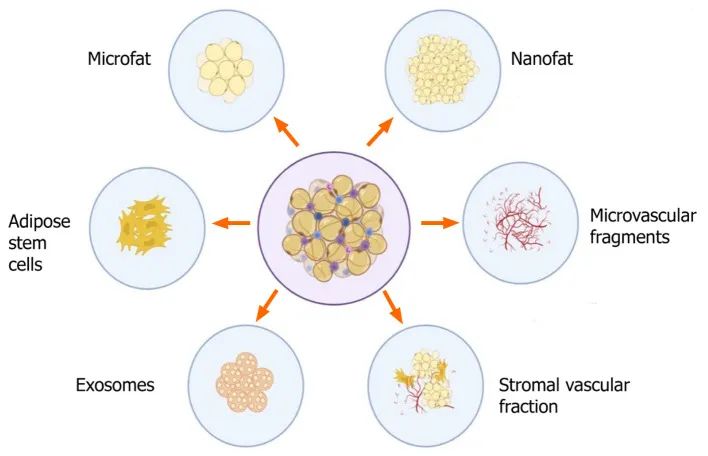
Adipose Cellular Structure and Components
Adult Human ADSCs Isolation & Culture Protocol
Research Use Only. Follow institutional biosafety and ethical guidelines.
Materials
1. Sample: Healthy adult adipose tissue ≥ 10 mL; collection within ≤ 48 h; stored at 4°C.
2. Reagents:
- OriCell™ Phosphate‑Buffered Saline (PBS) (Cat. No.: PBS-10001)
- Collagenase Type I (0.1%) (typical working solution ~125 U/mL; prewarm before use)
- OriCell™ Complete Medium For Human Adipose-derived Mesenchymal Stem Cells (Cat. No.: HUXMD-90011)
3. Consumables:
- 50 mL sterile collection bottle (×1),
- 50 mL conical tubes (×5–10)
- 10 mL serological pipettes (×4)
- T75/T175 flasks (as needed)
- 100 μm cell strainer (×1)
1) Adipose Washing & Collagenase Digestion
In a biosafety cabinet, transfer adipose tissue from the collection container to a T175 flask. Rinse with PBS at a 1:2 volume ratio (tissue : PBS). Cap securely, and shake it vigorously for approximately 3 minutes. Allow the mixture to stand for 3–5 minutes to separate phases, then aspirate the lower aqueous phase. Repeat washing until the lower phase is clear.
Preheat the Collagenase solution for approximately 30 minutes prior to use. Add freshly prepared, prewarmed Collagenase Type I (0.1%) to the tissue at a ratio of 1:2 (tissue : enzyme). Seal and briefly shake for 5–10 seconds. Digest the mixture at 37°C in a water bath with gentle agitation (about 150 rpm) for 30 minutes.
2) SVF (Stromal Vascular Fraction) Isolation
Centrifuge the digested tissue suspension at 900 × g for 10 minutes at room temperature. The resulting pellet is the stromal vascular fraction (SVF). Carefully remove the upper lipid layer and the lower collagenase-containing solution from top to bottom using a pipette. Leave a small amount of liquid above the SVF pellet to avoid disturbing the cells.
3) SVF Wash
Resuspend the SVF pellet in an appropriate volume of PBS and gently pipette to disperse the cells. Centrifuge at 300 × g for 10 minutes at room temperature. After centrifugation, carefully remove the supernatant. When aspirating, keep the pipette tip near the top of the tube to facilitate complete removal of the lipid layer.
Resuspend the SVF pellet in 40 mL of PBS. Filter the cell suspension through a 100 μm cell strainer into a new 50 mL centrifuge tube to remove undigested fibrous tissue and other debris. Gently mix the filtered cell suspension and centrifuge at 250 × g for 6 minutes at room temperature.
4) Primary Seeding
After centrifugation, aspirate and discard the supernatant using a pipette. Resuspend the cells in the centrifuge tube with OriCell™ Human ADMSCs Complete Medium (Cat. No.: HUXMD-90011) and seed them into T75 culture flasks, bringing the medium volume to 10 mL per flask. Place the flasks in an incubator and culture at 37°C with 5% CO₂.
5) Media Change
Perform the first half-medium change on the day after primary seeding. Gently transfer the culture medium from the flask into a 50 mL centrifuge tube and centrifuge at 500 × g for 6 minutes. Add 5 mL of the centrifuged old medium and 5 mL of fresh Complete Medium (Cat. No.: HUXMD-90011) to the T75 flask to complete the half-medium change. Return the flask to a CO₂ incubator set at 37°C, 5% CO₂, and saturated humidity. After the first medium change, perform a half-medium change every 3 days (adjust as needed according to cell growth).
6) Cell Passaging (P0 → P1; Subsequent Passages Follow the Same Procedure)
1. Prewarm the complete medium, PBS, and trypsin to 37°C.
2. Aspirate the culture medium from the flask. Wash the cells twice with PBS (approximately 3 mL for T25 flasks, 6 mL for T75 flasks), handling gently to ensure thorough washing. Aspirate the PBS.
3. Add trypsin (approximately 1.5 mL for T25 flasks, 3 mL for T75 flasks) and quickly spread it evenly to ensure full contact with the cell surface.
4. Monitor the digestion under a microscope. When approximately 70–80% of cells have rounded up, gently tap the outside of the flask to detach the cells.
5. Immediately add complete medium (approximately 3 mL for T25 flasks, 6 mL for T75 flasks) and gently swirl to mix with the trypsin, stopping the digestion.
6. Transfer the cell suspension using a pipette, gently pipetting over the bottom of the flask several times to detach remaining cells.
(Note: Avoid vigorous pipetting to prevent excessive bubbles, which may damage or cause loss of cells.)
7. Transfer the cell suspension to a centrifuge tube. Wash the flask once with PBS (3 mL for T25, 6 mL for T75) to collect remaining cells and combine with the main suspension.
8. Centrifuge all collected cell suspensions at 250 × g for 4 minutes.
9. After centrifugation, remove the supernatant. Resuspend the cell pellet in 2 mL complete medium, gently pipetting to fully disperse the cells. Seed cells at a density of 2.5–4 × 10⁴ viable cells/cm² into appropriate culture vessels.
(Note: Adipose-derived mesenchymal stem cells (ADSCs) are sensitive to seeding density. For accurate control, manual cell counting is recommended if feasible. If precise counting is not possible, seed according to suitable ratios. Typically, ADSCs are passaged at a 1:3 ratio and reach confluence within 72 hours. Adjust the seeding ratio according to actual cell growth.)
10. Gently mix the cells and incubate at 37°C with 5% CO₂ and saturated humidity.
11. On the next day, observe cell condition. If many floating cells are present, perform a medium change. Passage or cryopreserve the cells when they reach approximately 90% confluence.
Practical Tips
- Handle Gently: Avoid creating bubbles or applying vigorous pipetting during cell resuspension, as this may damage cells.
- Seeding Density Matters: Low cell density can delay adhesion and proliferation. Adjust density according to cell type and experimental goals.
- Lipid Layer Removal: When removing the lipid layer, keep the pipette tip near the upper supernatant to prevent disturbing the cell pellet.
- Prewarming: Ensure that enzymes and culture media are evenly prewarmed to 37°C to achieve consistent performance.
- Batch Variability: Collagenase activity can vary between lots; verify digestion parameters with small-scale pilot experiments before large-scale use.
Differentiation & Markers (for reference)
- Differentiation: ADSCs can be induced toward osteogenic, adipogenic, and chondrogenic lineages using specialized kits — see Stem Cell Differentiation Media.
- Identification: Typical MSC markers include CD44/CD90/CD105 (positive) and CD31/CD34 (negative or low); verify species/model specifics.
- Related Reagents: Cell Culture Supplements.
Related Q&A
1. What does "ADSCs" stand for?
Adipose‑Derived Mesenchymal Stem Cells (also "ADMSCs" or "ASCs").
2. What is the difference between ADSC and ADSCs?
"ADSC" is singular, while "ADSCs" is plural. Both refer to the same cell type.
3. Which enzyme is commonly used for adipose tissue digestion?
Collagenase Type I is widely used to release the stromal vascular fraction (SVF) from adipose tissue. Typical working concentrations are around 125 U/mL at 37°C with gentle agitation. For product availability, contact us.
4. What is SVF?
Stromal Vascular Fraction (SVF) is the heterogeneous cell pellet obtained after enzymatic digestion and centrifugation of adipose tissue. It contains ADSCs along with other stromal cells.
5. Are ADSCs adherent?
Yes. ADSCs are plastic‑adherent under standard culture conditions.
6. What are the recommended culture conditions?
Incubate at 37°C with 5% CO₂ and saturated humidity. Use an ADSC‑optimized complete medium and maintain appropriate seeding density.
7. What is the typical passaging ratio?
A 1:3 split is commonly used. ADSCs typically reach 80–90% confluence within ~72 hours, depending on the cell source and culture conditions.
8. What is the recommended seeding density?
Approximately 2.5–4 × 10⁴ viable cells/cm² ensures robust attachment and growth.
9. What markers are used to identify ADSCs?
CD44, CD90, and CD105 (positive), with CD31 and CD34 low or negative. Confirm species‑specific marker panels as needed.
10. Which medium should I use?
Use an ADSC‑specific complete medium, such as OriCell™ Adipose-derived Mesenchymal Stem Cell Complete Media.
11. How to choose between ADSCs and bone marrow MSCs (BMSCs)?
Adipose tissue generally yields higher MSC density and often exhibits stronger paracrine activity. Choice depends on the intended application.
12. What are ADMSC exosomes?
Exosomes secreted by ADSCs carry bioactive molecules and can be used for downstream applications. See Ready‑to‑Use Exosomes.
13. Can ADSCs be passaged indefinitely?
No. ADSCs have a finite replicative capacity. Using lower passage cells is recommended for experimental consistency.
14. How to prevent lipid contamination in samples?
Maintain strict phase separation during washes and carefully aspirate from above the cell pellet to minimize lipid carryover and improve cell adhesion.
Disclaimer: All products and processes mentioned are intended for research use only and are not for diagnostic or therapeutic applications.
About Cyagen OriCell™
Cyagen OriCell™ is a Cyagen brand focused on the research and development of cell biology products, including stem cells, primary cells, and cell lines, as well as cell culture reagents and technical services. Serving universities, research institutes, hospitals, CROs, and CDMOs worldwide, Cyagen OriCell™ has accumulated extensive expertise in cell isolation and culture. The team has developed “spatial replication” culture technology to rapidly establish growth‑supportive environments, and runs an Antibiotic‑Free process grounded in strict environmental, materials, and personnel controls. Cyagen OriCell™ provides end‑to‑end solutions—from MSC isolation and identification to directed differentiation and assay services.
Cyagen OriCell™’s offerings are cited in over 10,000 publications, with a cumulative impact factor exceeding 90,000 and more than 160,000 citations, and the team has supported more than 3,000 research groups. Products are used by tens of thousands of customers across dozens of countries and regions.

